



e are pleased to offer you an early look at the September 2025 issue of Family Business Review (FBR).
As an FFI member, you enjoy complimentary access to the entire FBR article library, with more than thirty years of insights and research tailored for the family enterprise community.
Accessing FBR and Past Issues is Simple:
- Log in to your FFI member account.
- Visit: my.ffi.org/page/family-business-review.
- Click the link on this page, and you’ll be automatically redirected to FBR for seamless access to the latest issue and the full archives.
About FBR:
Published by SAGE, Family Business Review is the leading scholarly publication devoted exclusively to exploration of the dynamics of family-controlled enterprise. It has a 5-year impact factor of 8.8, with a ranking of 39 out of 316 journals in Business. Source: Journal Citation Report® (Source Clarivate, 2024).
Vanessa Diaz-Moriana, Eric Clinton, Catherine M. Faherty, Colm O’Gorman
- How do family firms manage resilience when responding to an adverse event that disrupts their temporal orientation?
- How do the past, present, and future interact when family firms respond to adverse events?
- Our research offers a practical framework for understanding how family firms exhibit resilience during crises. This resilience is demonstrated through three relational behaviors: drawing on predecessor’s prior actions, trusting sibling bonds, and leveraging inter-firm and community relationships. These behaviors draw upon the past and enable family firms to effectively respond to current challenges while also preparing for the future.
- Our research indicates that family firm leaders should understand that while an external adverse event can disrupt their long-term perspective, it is crucial for the family firm to make immediate and short-term decisions to ensure survival. These decisions may not align with the firm’s long-term goals, so leaders must acknowledge the potential for an ambitemporal response, that is, the simultaneous accommodation of seemingly contradictory temporal outlooks.
- Our study emphasizes that family firms often recognize the significance of resilience behaviors and intentionally invest in enhancing these capabilities for future challenges. For example, one of the firms we studied organizes regular visits and internships for the next generation with international suppliers to strengthen inter-firm and community relationships. Another firm fosters sibling trust by participating in regular training programs. Family firms should prioritize identifying the most effective resilience strategies and integrating them into their organizational structure and culture to ensure long-term adaptability and sustainability.

Vanessa Diaz-Moriana

Eric Clinton

Catherine M. Faherty

Colm O'Gorman
About the Authors
Eric Clinton is an associate professor of entrepreneurship and director of the Centre for Family Business at Dublin City University, Ireland. His research primarily focuses on strategic entrepreneurial practices within family firms. In seeking to understand continuity and longevity in family firms, Eric explores topics including legacy, organizational goal tensions, entrepreneurial learning, trust dynamics, and long-term strategic thinking. Eric serves as an associate editor at the Journal of Business Research.
Catherine M. Faherty is an assistant professor of enterprise at Dublin City University, Ireland, and associate director of the Centre for Family Business. Her research sits at the intersection of organizational behavior and family business, with a particular focus on trust dynamics, leadership, and intergenerational relationships. Catherine’s work explores how behavioral and relational factors shape the unique challenges and opportunities within family-owned enterprises.
Colm O’Gorman is a full professor of entrepreneurship at DCU Business School and director of the DCU Institute for Business and Society, Ireland. His research focuses on entrepreneurship, necessity entrepreneurship, innovation, and growth in new firms and small and medium-sized enterprises (SMEs). Specifically, he has studied the growth strategies of SMEs, the nature of managerial work in high-growth SMEs, mission statements in SMEs, and internationalization processes in international new ventures and SMEs.
Susan Lanz, Gary T. Burke, Kajsa Haag, Omid Omidvar
- How are Intrafamily Ownership Transfers (IOTs) managed by business-owning families?
- How can ownership transfers be understood as a process based on the life stories of family owners?
- How do changes in family life courses (e.g., marriage, divorce, birth of a child, promotion, retirement) affect ownership transfer processes?
- How and when are ownership transfer processes interlinked with management succession?
- Plan ownership transfers separately from management succession. Avoid assuming that ownership and leadership must always transfer together. Treat ownership transfer as its own process that unfolds over time, shaped by family circumstances.
- Let family life events inform ownership planning and be adaptive. Life events, such as retirement, illness, marriage, or children coming of age, often prompt ownership decisions. Recognizing and planning around these shifts helps avoid rushed or reactive transfers, while remaining adaptive to unexpected events.
- Use symbolic and protectionist ownership transfers strategically. Gifting small shareholdings can signal trust and build connections with the next generation, while protective structures (like trusts or share classes) can preserve control and avoid future disputes, whilst in some family contexts protectionist transfers can also lead to intra-family conflict.
- Reflect on family histories and future life plans. When appropriate, sharing life stories and reflecting on how past experiences and future aspirations shape ownership expectations can help clarify intentions, surface assumptions, and support more thoughtful, context-sensitive ownership decisions.
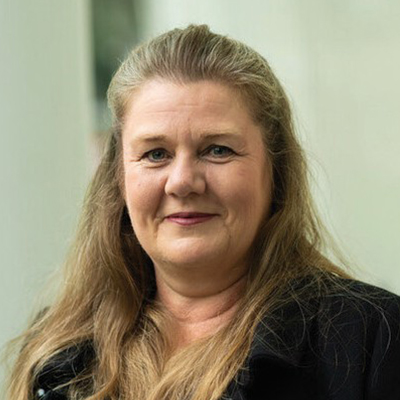
Susan Lanz

Gary T. Burke

Kajsa Haag

Omid Omidvar
About the Authors
Gary T. Burke is associate professor of strategy and organization studies at the University of Bristol, UK. His research uses qualitative and ethnographic methods, informed by practice and process philosophy, to explore how actors navigate complex problems. His work has been published in Academy of Management Journal, Journal of Management Studies, and Organization Studies, among other journals.
Kajsa Haag is an associate professor in business administration at Jönköping International Business School, Jönköping University, Sweden. She is a member of the Centre for Family Entrepreneurship and Ownership (CeFEO). Her research interests include succession and strategic renewal of family firms, strategizing and organizing as practice, ownership dynamics, purpose-driven organizations, family enterprise foundations, and the role of family firms in sustainable development. She is a recipient of the 2025 FBR Best Article Award.
Omid Omidvar is an associate professor of organization studies at Warwick Business School. His research examines the complex interplay between digital and computational technologies and organizational processes. Drawing on sociological and process theories, his studies span multiple contexts including financial institutions, open collaboration initiatives, and public-private partnerships. His research has appeared in leading journals including Academy of Management Annals, Journal of Management Studies, and MIT Sloan.
Ying Fu, Jinzhan Li, Emma Su
- What is the effect of second-generation involvement on a family firm’s environmental performance?
- How does the effect of second-generation involvement on environmental performance depend on the representation of non-family managers in the firm and the competitive market environment in which the firm operates?
- Family businesses that want to improve their environmental performance should involve second-generation family members in the company. Those with a college degree or higher tend to have a stronger positive influence on environmental efforts.
- Family firms should recognize the value that non-family managers can bring, especially when it comes to improving environmental practices. Bringing them into the business can be a smart move.
- It’s important for family businesses to pay attention to the market environment they operate in. A more competitive market can actually help push the company to take stronger action on environmental issues.

Ying Fu

Jinzhan Li

Emma Su
About the Authors
Jinzhan Li, a postgraduate in Business Administration from Nanchang University, is currently working in the Human Resources Department at 15MCC International Engineering Co., Ltd.
Emma Su is an associate professor of management in the School of Business Administration at the University of Dayton. Her research focuses on family business, entrepreneurship, and strategic management. Her work has been published in leading academic journals, including Family Business Review, Journal of Family Business Strategy, and Journal of Business Ethics, among others.
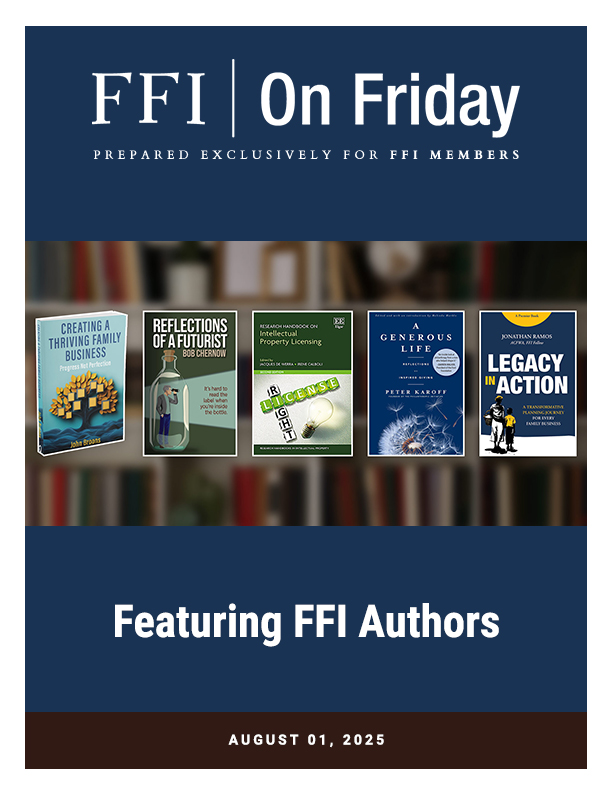
Have we missed a recent book or report? Help us keep this feature vibrant by sharing news about publications from the FFI community.
 Dates to Remember
15
Learn More and Enroll
5
Details to Follow
16
Learn more and Register
29
Hotel Reservations
29-31
Learn more and Register
10
Details to Follow