


Governance
A Reflection on Family Trusts as the Longest-Lived Family Members
Weekly Edition • July 1, 2026
Download PDF
Search by Topic
People sitting at table with open laptops
third in a 2026 series by

Hughes and Whitaker
FFI Practitioner: July 1, 2026 cover
From FFI Practitioner
Family trusts are typically viewed as legal and financial structures, but what if they are also members of the family system? In this third installment of our 2026 series from Jay Hughes and Keith Whitaker, the authors explore trusts through a family-systems lens, suggesting that long-lived trusts can become enduring participants in family life. Drawing on themes of governance, ritual, legacy, and stewardship, they invite readers to reconsider the role trusts play in sustaining family continuity across generations.
FFI 40th Anniversary logo with text: Educate. Connect. Inspire.
Who’s family? This question is always at the foundation of any serious attempt to manage family wealth, a family enterprise, or even a family vacation.
The first step to any successful governance system is to determine who makes up the members of that system and, thus, who will be governed by it.

Biology offers the beginning of an answer. But there has never been a family solely of blood.

Trusted lawyers, financial advisors, household managers, and other personnes de confiance may be considered family. Affinity makes a family as much as, and perhaps even more than, law or DNA.

What about nonhuman family members? Anyone who has shared ownership of a family business or family vacation home knows that these often have a “seat at the kitchen table” when it comes to thinking through important decisions.

“These could be the longest-lived family members—but only if they breathe with the spirit of the grantor.”
Could a family trust be considered a family member?

It’s easy to see how this could be the case with a “pot trust” or “sprinkle trust,” where multiple generations across multiple branches of an extended clan intimately knew “the Trust” and its benefactions. In very old families, the same trust might have tapped the shoulders of several generations of beneficiaries.

The ancestor of the pot trust was “the estate,” originally the family’s ancestral seat. Surely such an estate would qualify as the longest-lived family member?

Most dynastic trusts now have provisions for division per stirpes. If “the” trust continues at all—a big “if” in our day of decanting and restatements—it is known as “my” XYZ Trust. “My” XYZ Trust would probably look much different from my cousin’s XYZ Trust. Would it remain the same family member?

Sidebar
FFI Practitioner: May 6, 2026 cover
Welcoming the Second Trustee
FFI Practitioner
By James E. Hughes and Keith Whitaker
The transition from a first trustee to a second trustee represents a pivotal moment in the life of a family system shaped by trusts. While technical considerations often dominate discussions of trustee succession, the human dimensions—loss, trust, identity, and renewal—are equally consequential. This article, the second in our 2026 series from Jay Hughes and Keith Whitaker, explores the emotional and relational dynamics that accompany this transition and offers insights for practitioners supporting families through this critical phase.

Second in the 2026 series

Learn More
The fundamental question is this: “Do I believe that this money should be used (or not used) in certain ways, with certain intent, because of who my father, grandfather, mother, grandmother, or other ancestor was?” If yes, then your ancestor, the grantor, remains, in a way, alive as a ghostly presence in the use of “your” trust.

Is this ghost restless? Or friendly? Families exclude their ghosts from their governance system at their peril; a family’s ghosts are, almost always, critical parts of it.

In the case of a trust, the way to bring the ghost into a beneficent relationship with the family is through ritual. Ritual offers gratitude from living family members and rebirth to the ghost. Such rituals can take the form of celebrating the appointment of a new trustee; celebrating when a beneficiary comes of age; annually commemorating the wishes or intent of the grantor (or, in the absence of the expression of such wishes, the stories of that grantor’s life); and inviting the trustee, as representative of this “family member,” to relevant family meetings, discussions, and decision-making.

In other writings, the authors have said that a trust, to be useful to a family, must contribute to a culture of care. Care means that the trustee seeks to enable the trust to enhance the lives of its beneficiaries. Such trustees are profoundly committed to the well-being of the families whose trusts they administer. Isn’t it likely that they will be seriously positive contributors to the family, making excellent long-term decisions toward the flourishing of all parts of its system?

“Such trustees may have the longest-term effect on the family’s flourishing and well-being.”
Many trusts are created with the Ozymandian pretension of lasting for centuries, if not forever. Certainly, with terms longer than the lives of their initial beneficiaries, these could be the longest-lived family members—but only if they breathe with the spirit of the grantor, renewed through grateful ritual and intentional inclusion.

Should such a trust endure, the trustees will see how the family journey turns out. With their responsibility for good governance, such trustees may have the longest-term effect on the family’s flourishing and well-being.

What could be a more effectual definition of a “family member”?

Given these reasons, can you see why we believe that such trustees can be a critical part of family governance, and why their inclusion in the family’s decision-making is a crucial element of wise governance?

About the Contributors
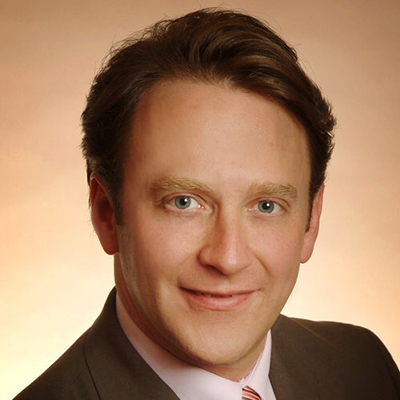
James E. Hughes headshot
James E. Hughes, FFI Fellow, is the author of Family Wealth: Keeping It in the Family, and of Family: The Compact Among Generations, as well as co-author of many books in the field of family wealth. Jay was the founder of a law partnership specializing in the representation of private clients. In 2021, The James E. Hughes, Jr. Foundation was founded in Jay’s honor. He can be reached at contact@JEHJF.org.
Keith Whitaker headshot
Keith Whitaker, PhD, is the founding director of Wise Counsel Research Foundation. An educator who consults with leaders and rising generation members of families with significant wealth, he also serves select families as an independent trustee. He can be reached at keith@wisecounselresearch.com.
Related Editions
People sitting at table with open laptops
“The First Trustee”
By James Hughes and Keith Whitaker
Read More
A close-up of an empty black leather office chair, with a blurred group of diverse executives sitting in the background.
“Reflection on Ghosts in a Family System”
By James “Jay” E. Hughes, Jr., Mary Duke, and Stacy Allred
Read More
Back to Editions
ffipractitioner.org
Not already a member of FFI?
Become a member now
Share: