


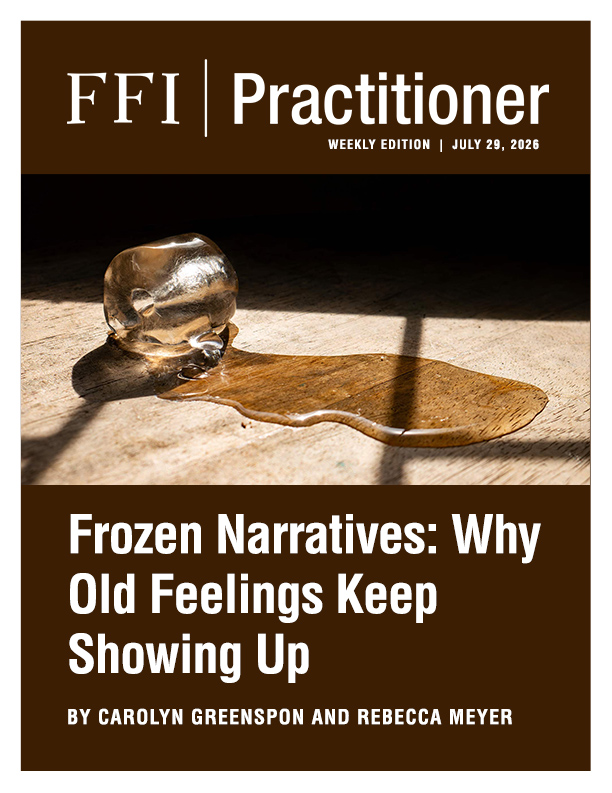

At Relative Solutions, we often encounter what we call frozen narratives—emotionally charged interpretations of past events that have hardened into assumptions, often about fairness, character, or intent. They are rarely discussed openly. Yet they can significantly influence how families relate, collaborate, and govern.
Consider one family.
Several years after their parents died, four siblings found themselves at an impasse over the family’s lake property. A large main house, two smaller cottages, and a dock had been the setting for their childhood summers.


Then the roof on the main house failed, and the dock needed substantial repairs. Suddenly, the siblings were asking:
- Who is responsible for what?
- Who has contributed more over the years?
- Who has benefited more?
- What is fair?

When the Past Shapes the Present
Over time, these old assumptions had hardened, becoming a “frozen narrative.”
Frozen narratives are stories about the past—often about a time when something felt unfair—from which everyone walked away with a different interpretation. Because the situation was never discussed and unpacked, its meaning solidified.
When this happens, we tend to stop seeing the present context of a situation and instead view everything through the lens of the past. Often, that lens defaults to a story about character. Internal monologues may sound like this:
“He’s selfish.”
“She was always the favorite.”
“They can’t be trusted.”
Once that story sticks, it shapes much of what follows.

The Cost of Staying Frozen
Frozen narratives do not simply sit in the background. They influence governance decisions, transition planning, philanthropic choices, and the management of shared assets. Resentment is expressed through practical debates. Judgment replaces inquiry. People defend positions rather than explore what is possible.
Over time, this stagnation affects both relationships and assets. Decisions are delayed. Opportunities are constrained. The next generation inherits not only ownership but also the emotional residue of unresolved stories.
This dynamic is not inevitable, but it can seep into long-lived family enterprises. The longer a narrative remains frozen, the more it undermines connection and trust—and the greater its impact on the sustainability of the family enterprise.
Thawing Frozen Narratives
Thawing frozen narratives is not about determining who is right and who is wrong. It is about examining assumptions and learning to recognize the validity of multiple perspectives. It is about loosening the grip of stories that no longer serve the family or its shared economy. For many families, this work is emotionally charged and can benefit from the guidance of a skilled family enterprise consultant.
When families decide they are ready to do this work, a few practical steps can help.
Start with Yourself
Take time for self-reflection. Consider asking yourself:
- How do I remember and make sense of what happened?
- What assumptions am I making about others’ motives?
- Where have I attributed intent rather than explored circumstance?

Be Open to Other Versions
When the family comes together, the goal is not to correct or debate the past. It is to approach it with curiosity and a desire to understand. Invite each person to describe how they experienced the event—without interruption or rebuttal.
The same series of events can be remembered very differently by different people. Often, a willingness to hear those differences can begin to reduce defensiveness.
Slow the Conversation Down
Productive conversations about the past require structure, pacing, and clear guardrails so that they do not become a replay of the original conflict.
Look for a More Complete Story
Through structured conversations, families can piece together a broader account—one that acknowledges different experiences. This is not about reaching agreement, nor is it about rewriting history. It is about widening the aperture to make room for multiple interpretations.
Moving Forward
In the case of the lake property, the roof and dock still needed repair. But once the siblings began examining the narratives they were carrying, the conversation shifted. It was no longer a tug-of-war over funding. Instead, they made time to understand how each person had experienced past events and how those experiences had influenced subsequent actions and interpretations.
This shifted the tone of their conversations about how to use and maintain the property while also addressing the needed repairs. It also helped them approach other shared decisions more cohesively. That is the power of thawing frozen narratives.
Nearly every enterprising family has narratives about the past. The question is whether those stories are adversely governing the present—and getting in the way of connection in the future.
Are there stories about past events that are chilling the dialogue in your family? What might become possible if you worked together to thaw them?